


7 Native Plant Swaps for Western Pennsylvania Gardens
Most yards are full of plants picked for one job: a red shrub for fall color, a groundcover that fills the empty spaces, and grasses for movement and texture. But what if your yard could do more than just look pretty?
Native plants in Pennsylvania can do those same jobs, while also feeding pollinators and birds. And it’s easier than you think to make those swaps! You don’t need to completely redesign your yard to support local wildlife.
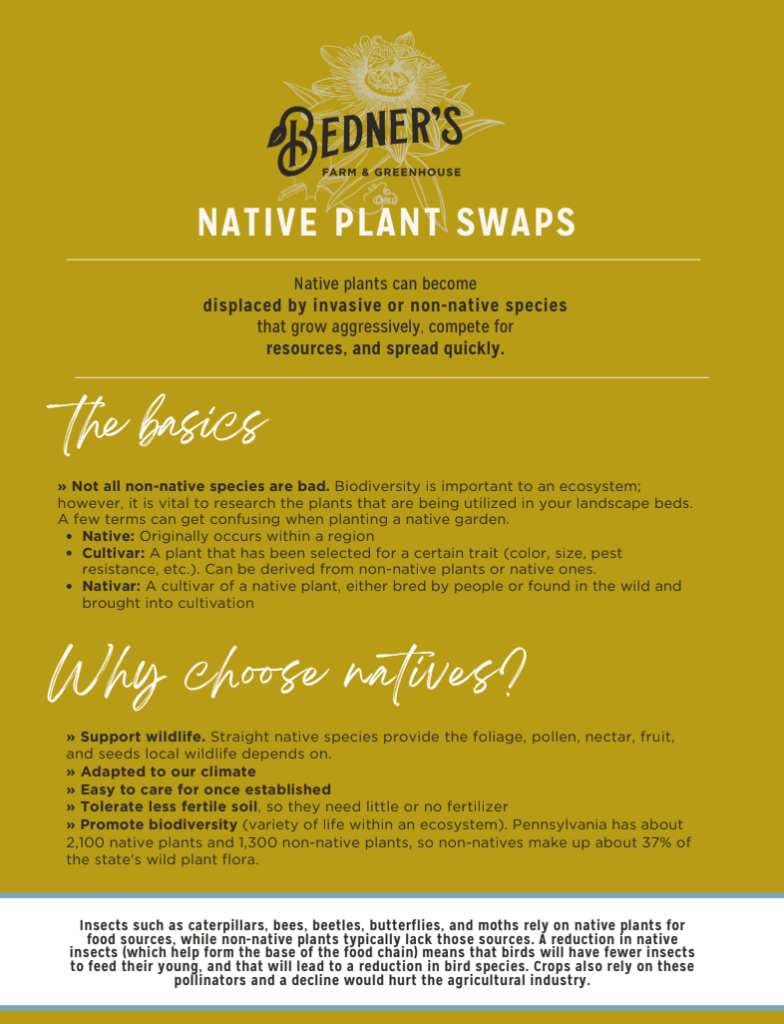
Not all non-native species are bad. Biodiversity is important to an ecosystem; however, it is vital to research the plants that are being utilized in your landscape beds.
A few terms can get confusing when planting a native garden.
- Native: Originally occurs within a region
- Cultivar: A plant that has been selected for a certain trait (color, size, pest resistance, etc.). Can be derived from non-native plants or native ones.
- Nativar: A cultivar of a native plant, either bred by people or found in the wild and brought into cultivation
If you’ve been searching for Pittsburgh native plants that fit into your existing garden, this guide provides seven common plants with natives that do the same work.
17 Native Plant Swaps for Western PA
Fill out the form to receive our full guide to native plant swaps and a one-page list of 17 swaps. Bring it to the greenhouse with you when you shop to make choosing plants easier.
Why swap for a native plant
Native plants support Pennsylvania wildlife in ways many imported plants cannot because they’ve evolved alongside local insects and birds. Caterpillars feed on native foliage, songbirds feed on those caterpillars, and pollinators find nectar and pollen that fits their life cycles.
In addition, several of the most common landscape plants in western Pennsylvania are now illegal to sell here, as we’ll highlight in the next section.
Pennsylvania’s banned landscape plants
Pennsylvania’s noxious weed list is a state-maintained list of plants the Department of Agriculture has determined cause serious harm to natural areas, farmland, or native ecosystems. Once a plant is added, it can’t legally be sold or propagated in the state.
Here are the banned plants most commonly found in Pennsylvania gardens:
- Japanese barberry (some cultivars are exempt)
- Callery (Bradford) pear
- Burning bush
- Privet
- Shrub honeysuckles
- Common and glossy buckthorn
- Oriental bittersweet
The ban applies to sellers like Bedner’s, not homeowners. So if you already have one of these plants, you’re not required to remove it, though Penn State Extension encourages removal when possible. Many gardeners wait to replace these plants as they age, get damaged, or stop earning their space.
Invasive plants that are still sold in Pennsylvania
Some invasive plants are still legal to buy, which is where a garden center’s guidance matters most.
Pennsylvania’s Department of Conservation and Natural Resources lists common periwinkle (vinca) as an invasive groundcover that forms thick mats, even under dense tree canopy. It also lists Japanese honeysuckle as an ornamental vine that has become an abundant weed across southern Pennsylvania.
Grasses fall in a similar gray area. Penn State Extension says pampas grass and Japanese silvergrass (miscanthus) aren’t listed as noxious weeds in Pennsylvania, but they’ve shown invasive tendencies and are best avoided.
Do I have to plant only native plants?
No. Natives are a great place to start, and they’re what we recommend when you’re replacing an invasive. A garden doesn’t need to be all native to help pollinators, though. Plenty of non-native plants stay put in the garden and still give bees and butterflies nectar and pollen. Some of them, like catmint, keep blooming after many natives have finished. As North Creek Nurseries puts it, “ecological function can be more complicated than a plant’s passport.”
Researchers are still learning how much different non-natives do for wildlife. What they already agree on is that variety matters. A yard with trees, shrubs, perennials and grasses gives pollinators food and shelter across more of the year than a yard with one or two types of plants. How you care for it matters too: leaving stems and leaves standing through winter gives insects a place to live. [Link to fall cleanup blog.]
That’s how we plant at Bedner’s, and it’s why we built our [pollinator plants collection]. It has Pennsylvania natives and well-behaved non-natives, chosen for what they do for pollinators.
What makes a good swap
The best swaps match the job, not the look. Ask what the original plant does in your yard: fall color, a tidy hedge, spring flowers, shade coverage, height, texture. Then choose a native that does the same job in the same conditions. A shade-loving replacement won’t help in a hot, dry bed, so match sun, soil, and moisture as well as the role.
Native plant swaps by job
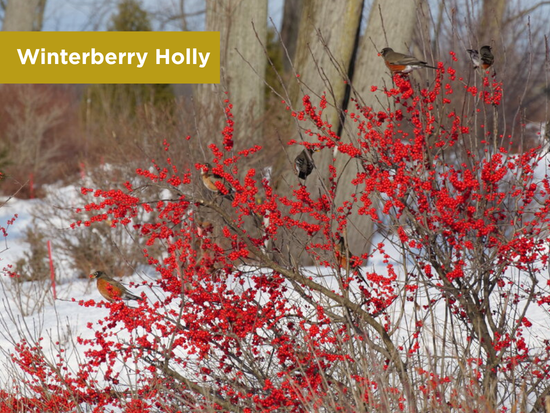
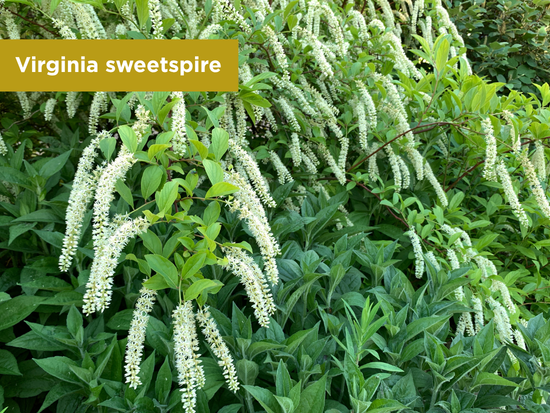
Shrub swap: Japanese barberry → winterberry holly or Virginia sweetspire
Japanese barberry is a tough, colorful shrub for borders and foundations. Both winterberry holly and Virginia sweetspire appear on a Morris Arboretum list of native alternatives, along with inkberry holly, bayberry, and black and red chokeberry. If you’re after barberry’s red-purple foliage, ninebark covers that job. Winterberry covers fall and winter color, with bright red berries that stay on the branches after the leaves drop. The berries feed birds, and the small spring flowers support native bees. (Note: winterberry needs both a male and a female plant to fruit, so check which pairings work well together before purchasing.)
For more on winterberry holly, see our 7 Trees and Shrubs to Plant This Fall blog.
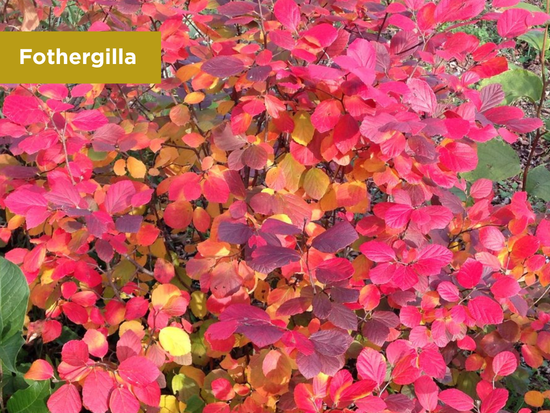
Fall color swap: burning bush → dwarf fothergilla, southern arrowwood, or red twig dogwood
A Penn State Master Gardener column recommends dwarf fothergilla for its fragrant bottlebrush flowers and fall color, and southern arrowwood for spring flowers and yellow-to-red fall foliage. Both bloom in spring, giving early pollinators a food source, and arrowwood’s berries feed birds later in the year.
If your yard needs help in winter rather than fall, red twig dogwood is a good pick. Its striking red stems make a focal point in the winter landscape, and some varieties have yellow stems. Its spring flowers also attract pollinators.
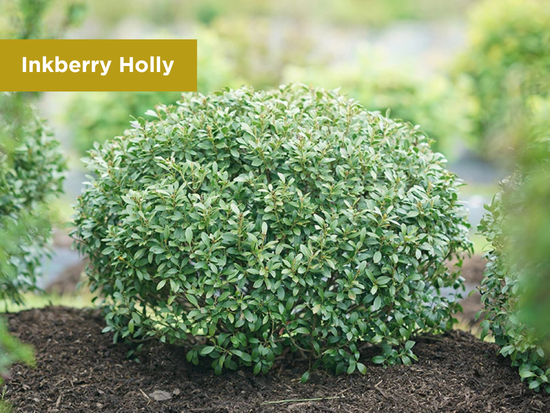
Hedge swap: privet → inkberry holly or northern bayberry
If you like the clipped, dense look of a privet hedge, a former Penn State Master Gardener coordinator recommended inkberry holly and northern bayberry because both grow in a hedge style similar to privet. Inkberry’s small flowers attract bees, and bayberry’s waxy fruit feeds birds through winter.
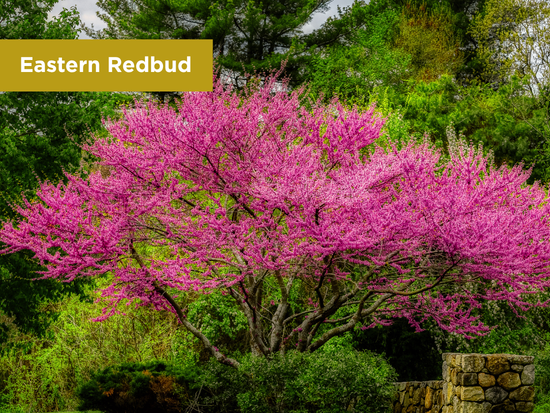
Tree swap: Callery (bradford) pear → serviceberry or Eastern redbud
Callery (bradford) pears were planted everywhere in the 1960’s and 1970’s for their spring show. But their flower’s unpleasant smell, combined with their tendency to split during storms and invasive nature, earned them a spot on the noxious weed list.
Penn State Extension names serviceberry as a native alternative with spring flowers, fall fruit for birds, and strong leaf color.
Eastern redbud gives you a similar early-spring bloom, and its flowers are an early nectar source for bees. Penn State also lists flowering dogwood and alternate-leaf dogwood as native options.
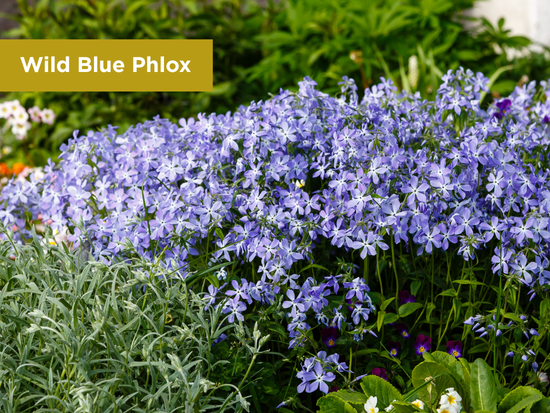
Groundcover swap: vinca → Pennsylvania sedge, Allegheny spurge, or wild blue phlox
Vinca is a common groundcover planted on slopes and shady areas. Instead, try planting native plant Pennsylvania sedge to give your garden a soft, grassy carpet. Another option is Allegheny spurge, which offers evergreen coverage with small early-spring flowers. Or you could swap vinca for wild blue phlox that brings spring color to attract butterflies and other pollinators.
Pennsylvania sedge is also covered in our Native Grasses for Pennsylvania Gardens blog.
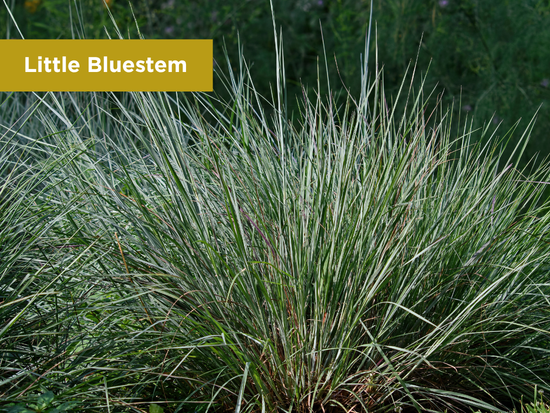
Grass swap: miscanthus → switchgrass or little bluestem
Miscanthus isn’t banned, but it’s worth swapping because it spreads rapidly and crowds out native plants. Switchgrass and little bluestem are great alternative native plants to Pennsylvania that give you the same movement and winter interest, with the added benefit that their seeds feed birds and their foliage shelters insects.
Find more options in our blog Native Grasses for Pennsylvania Gardens.
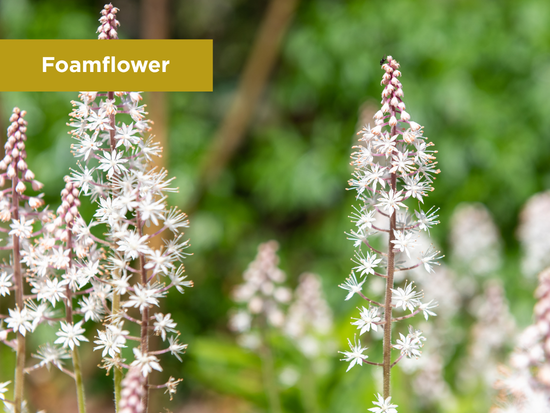
Shade perennial swap: hosta → foamflower or wild ginger
We promise, nobody’s asking you to give up your hostas! But if you’re filling a new shady spot, or a hosta bed has become a deer buffet, foamflower and wild ginger are worth trying. Foamflower sends up airy spring flower spikes for small native bees, and it’s more deer resistant than hosta.
Find the right swaps for your yard
Explore our inventory of perennials, trees, and shrubs to find the right swap for your garden. Available for in-store pickup or local delivery.
17 Native Plant Swaps for Western PA
Fill out the form to receive our full guide to native plant swaps and a one-page list of 17 swaps. Bring it to the greenhouse with you when you shop to make choosing plants easier.
Frequently asked questions about native plant swaps
Do I have to remove my existing plants to go native?
No. Pennsylvania doesn’t require homeowners to remove plants on the noxious weed list, though removal is encouraged. Swap as plants fail or need replacing, starting with anything invasive.
Are native plants lower maintenance?
Usually, once established, when they’re matched to the right site. The first season still needs regular watering.
What native plants replace Japanese barberry?
Winterberry holly, ninebark, and inkberry holly are all common native alternatives.
What can I plant instead of burning bush?
Fothergilla and southern arrowwood both give strong fall color and are native.
Is burning bush banned in Pennsylvania?
Yes. It was added to the state noxious weed list in 2023, and garden centers have been prohibited from selling it since January 2025.
What should I do about honeysuckle, buckthorn, or bittersweet in my yard?
These usually arrive on their own, spread by birds that eat the berries, rather than being planted. Removing them takes more than one round, because all of them resprout from the roots after you cut them. Before you start, confirm what you have. Each one has a native look-alike. For step-by-step control methods, see Penn State Extension’s guides to shrub honeysuckles, Oriental bittersweet and buckthorn identification.
Where can I buy native plants near Pittsburgh?
Bedner’s carries native perennials, shrubs, grasses and trees. Start with our pollinator plants collection, where Pennsylvania natives are marked alongside the well-behaved non-natives we love for filling gaps in bloom time. You can also visit the greenhouse, and our staff will help you find the right swap for your yard.

Melanie has been with the family garden center business since 1999, gaining hands-on experience in nearly every aspect–from cashiering and greenhouse production to bookkeeping, perennial buying, marketing, and store management. Now serving as Finance and Marketing Director, she combines her expertise with a passion for growing the business. She and her husband, Russ, have loved seeing how plants, gardening, and beautiful landscapes bring joy to our community.


